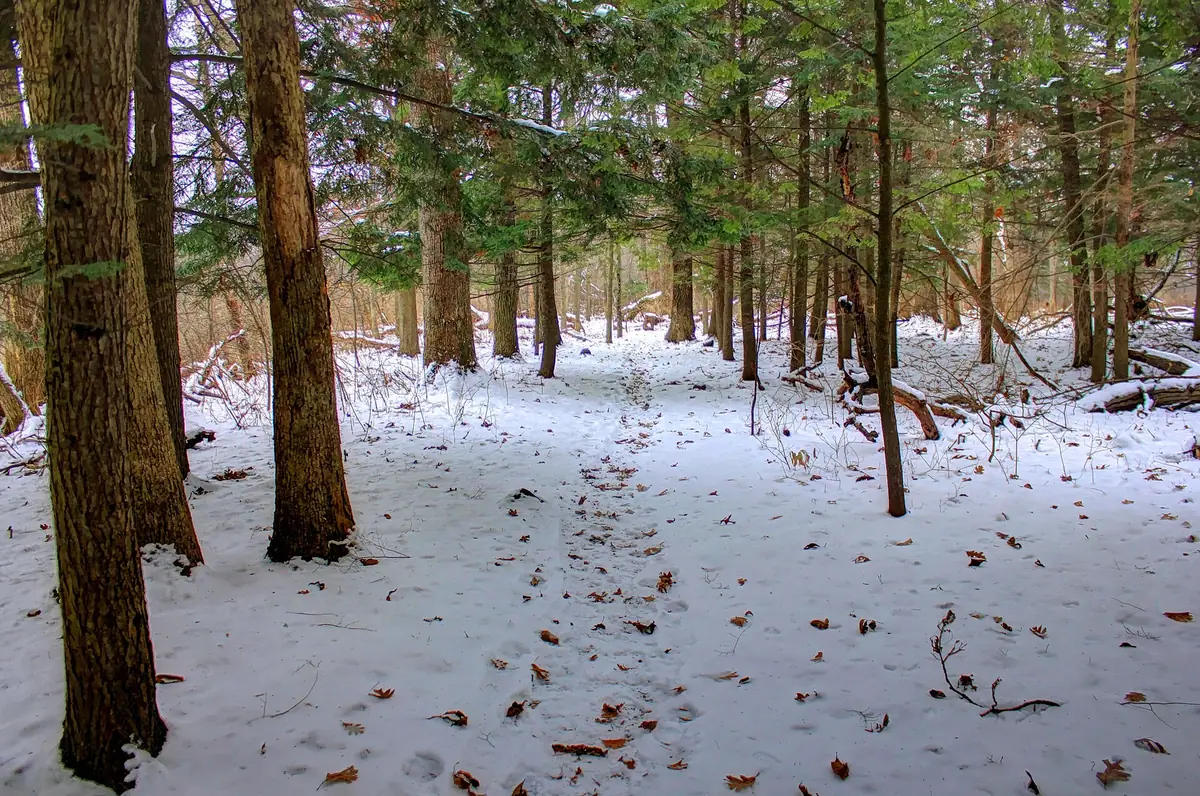
If your woods have turned into a dense wall of shrubs that stay green into November, there’s a good chance it’s buckthorn. It’s the single most common reason central Wisconsin woodlots become impassable, and the most common reason people call us.
How to identify buckthorn
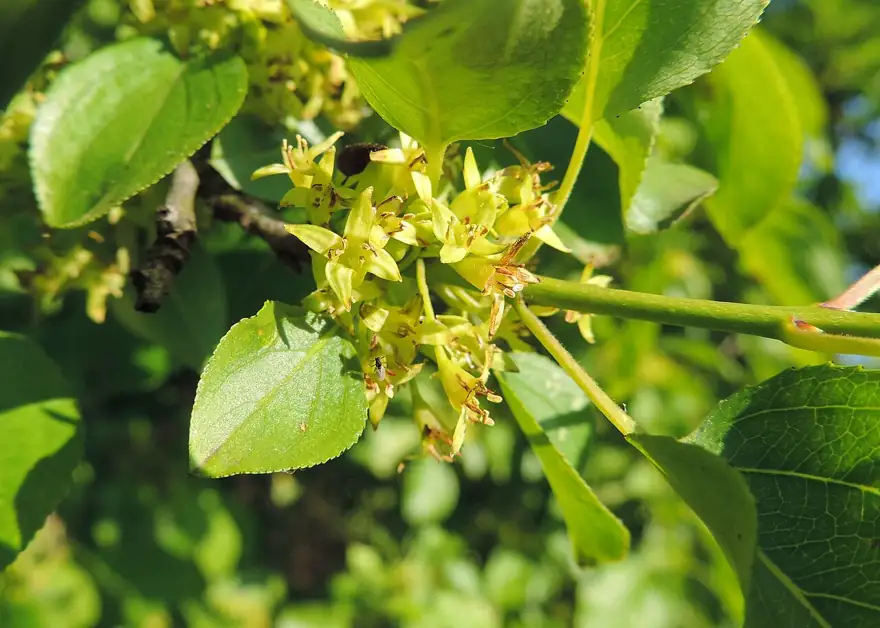
- Common buckthorn (Rhamnus cathartica): oval leaves with finely toothed edges and veins that curve toward the tip; often a small thorn at the end of a twig; inner bark that’s orange when scratched; dark purple-black berries that hang on into winter.
- Glossy buckthorn (Frangula alnus): shiny, smooth-edged leaves; no thorns; common on wetter ground and swamp edges.
- The giveaway: in late October and November, buckthorn is still green after native shrubs have dropped their leaves.
Both are listed as restricted invasive species under Wisconsin’s NR 40 rule, along with the non-native bush honeysuckles that often grow alongside them. Landowners aren’t required to remove them, but the DNR encourages control.
Why buckthorn is so hard to beat
- It re-sprouts from the stump. Cut it and you get a cluster of new stems.
- It has a seed bank. Years of berries leave seeds in the soil that keep germinating after the thicket is gone.
- Birds keep spreading it from the neighbors’ land.
That’s why cutting alone, or mulching alone, often leaves the thicket thicker two years later.
The plan that works
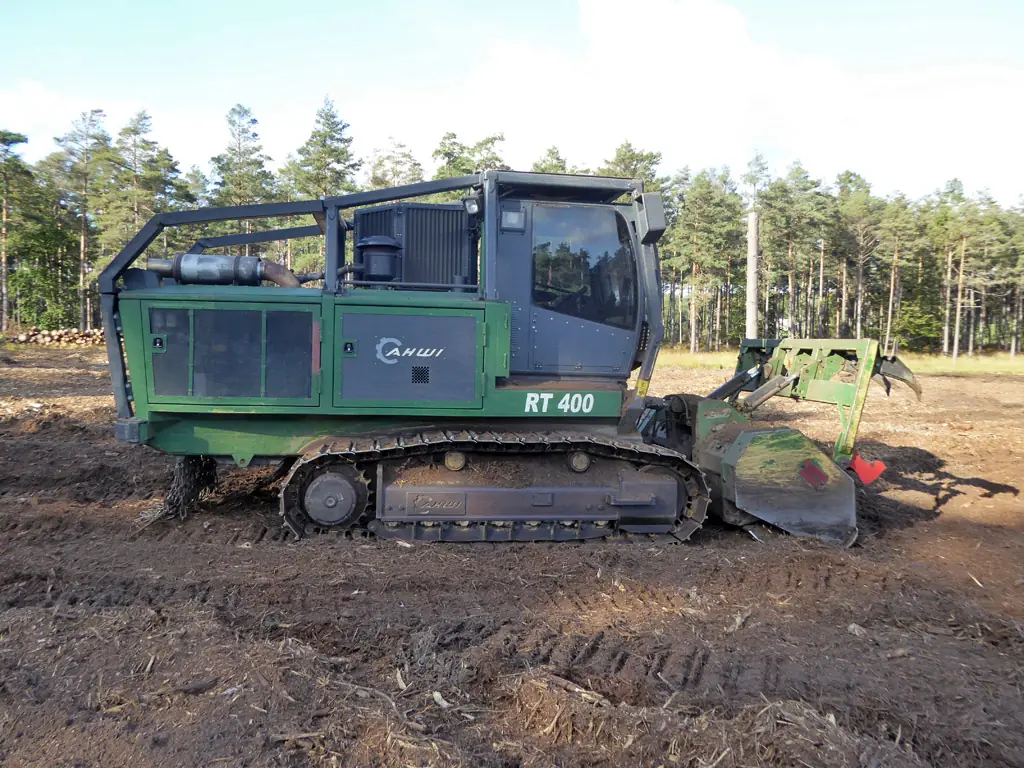
- Mulch the thicket. A forestry mulcher grinds dense buckthorn to the ground fast, leaves the mulch to hold the soil, and works around the oaks, maples and native shrubs you want. See buckthorn removal.
- Treat the regrowth. The next growing season, stump sprouts are treated, usually with a foliar or basal herbicide applied according to the label (in Wisconsin, by a certified applicant if it’s done for hire).
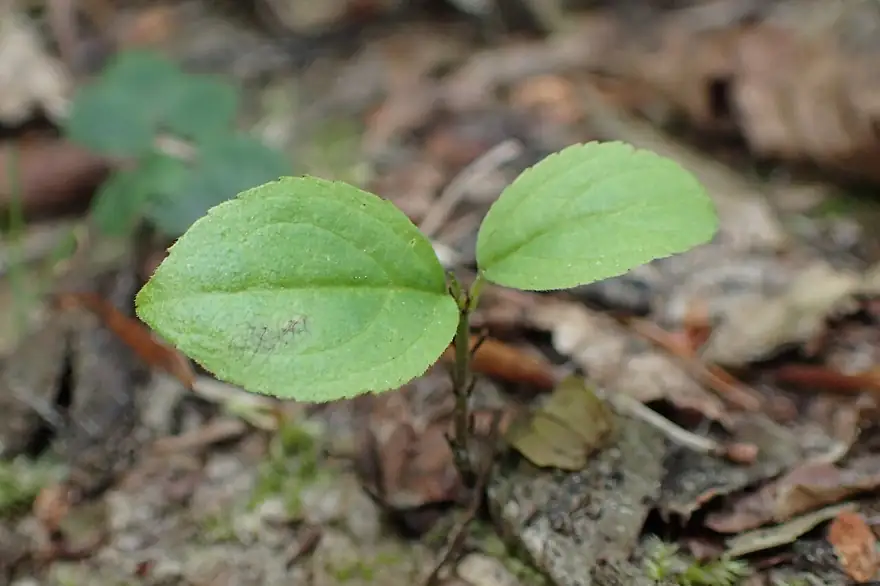
- Pull or spot-treat seedlings for a few years until the seed bank is exhausted. Small seedlings pull easily after a rain.
- Get something native growing. Shade from new native shrubs and trees is long-term buckthorn control.
Need land cleared near Wausau?
Wausau Forestry Mulching clears lots, brush, buckthorn, trails and hunting land across central Wisconsin, mulched in place with a written price before any work starts. Request a quote online and we’ll call you back.
Best timing
Late fall through winter. Buckthorn is easy to pick out while it’s the only green thing in the woods, and frozen ground lets a mulcher onto the wet swamp edges where glossy buckthorn grows without rutting. Winter work also stays well clear of the April-to-mid-July oak wilt window. See the best time to clear land.
What it costs
Mulching a buckthorn thicket while keeping the good trees typically runs $1,000–$3,500 per acre, depending on stem density and how many keepers there are, plus follow-up treatment. Use the cost calculator with “selective” clearing for a ballpark.