“Brush hog” and “forestry mulcher” both get called brush clearing, but they’re very different machines with very different price tags. Picking the right one saves money.
The difference
- A brush hog is a heavy rotary mower: a big spinning blade under a deck, pulled by a tractor or mounted on a skid steer. It cuts grass, weeds and woody brush up to about 2 inches thick and leaves the clippings lying on the ground.
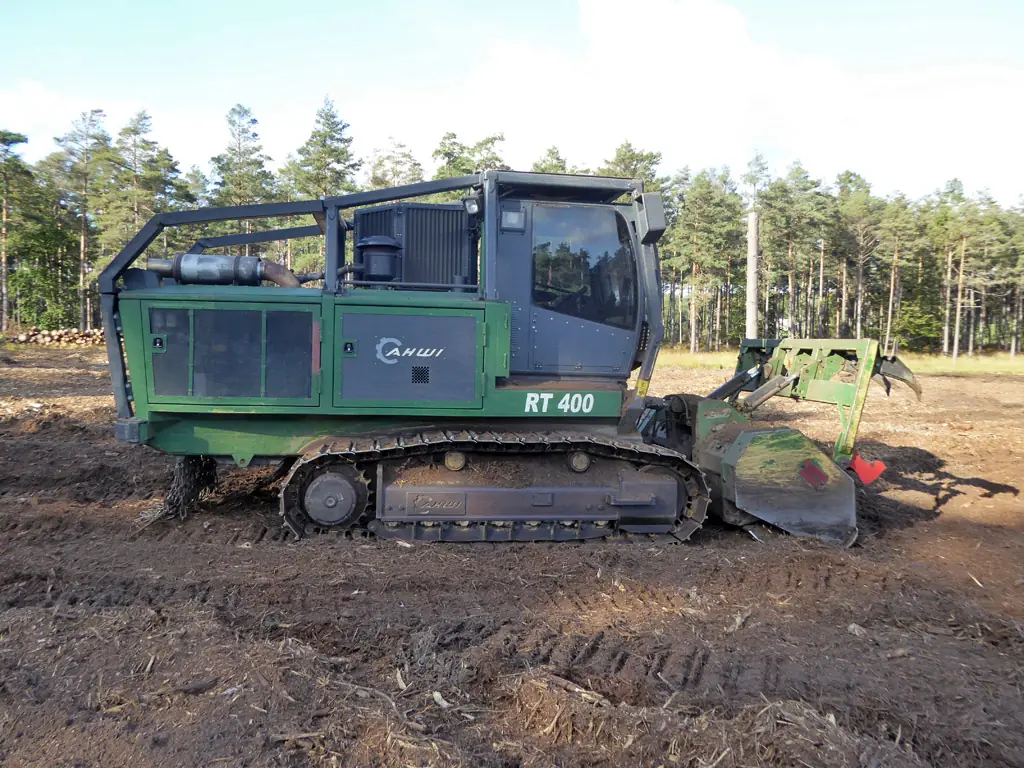
- A forestry mulcher is a toothed drum that grinds standing trees, often 6–8 inches and up, plus stumps, into mulch.
The thumb test
Walk the area and look at the biggest stems. If almost everything is thinner than your thumb or a broom handle (grass, goldenrod, raspberries, young sumac and dogwood), a brush hog will do it, faster and cheaper. If there are lots of saplings thicker than a broom handle, or any real trees, you need a mulcher. A brush hog on 3-inch aspen just bends it over and breaks itself.
Cost
Brush hogging is priced by the hour or the acre and runs well below forestry mulching for the same ground, because the machine is cheaper and moves faster. Mulching makes sense when the brush hog physically can’t do the job. Mulching rates are in the cost guide.
Need land cleared near Wausau?
Wausau Forestry Mulching clears lots, brush, buckthorn, trails and hunting land across central Wisconsin, mulched in place with a written price before any work starts. Request a quote online and we’ll call you back.
Often the answer is both
A common pattern on central Wisconsin fields and lots:
- Mulch once to take out the trees and heavy brush that have taken over. See field reclamation.
- Brush hog every year or two after that, so nothing woody gets established again. See brush hogging.
That combination is the cheapest way to keep a field, trail or food plot open for the long run.
A note on wildlife timing
If the ground is grassland that birds and fawns use, mowing after mid-summer avoids most of the nesting season. Many landowners mow half a field each year to leave cover.