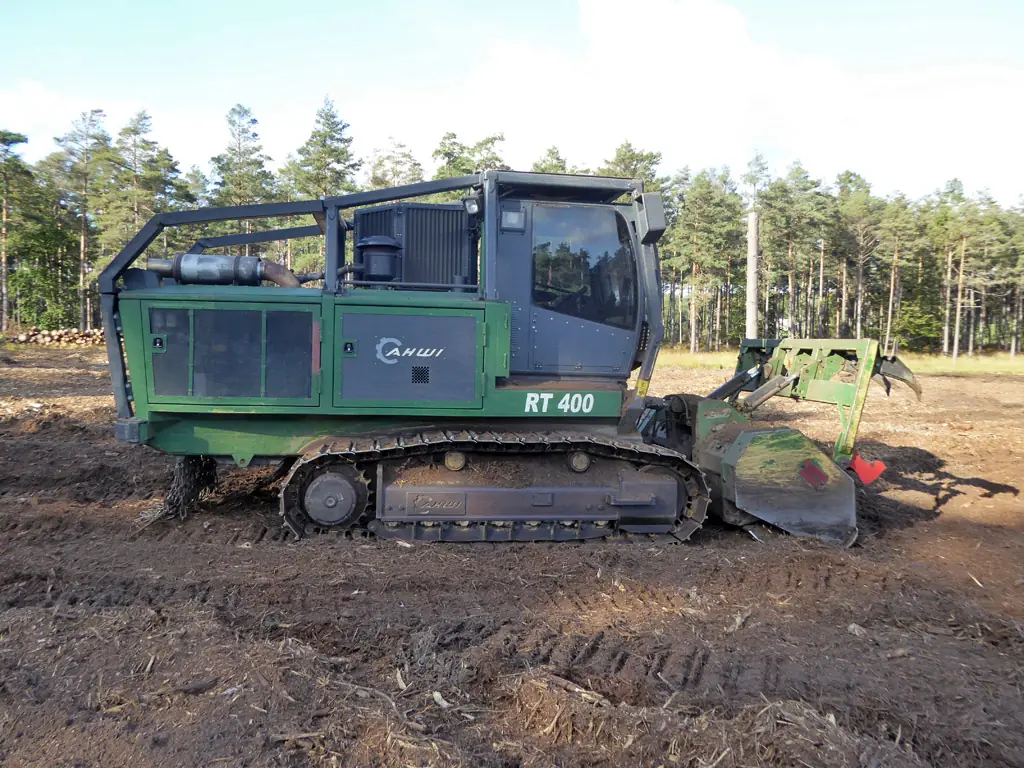
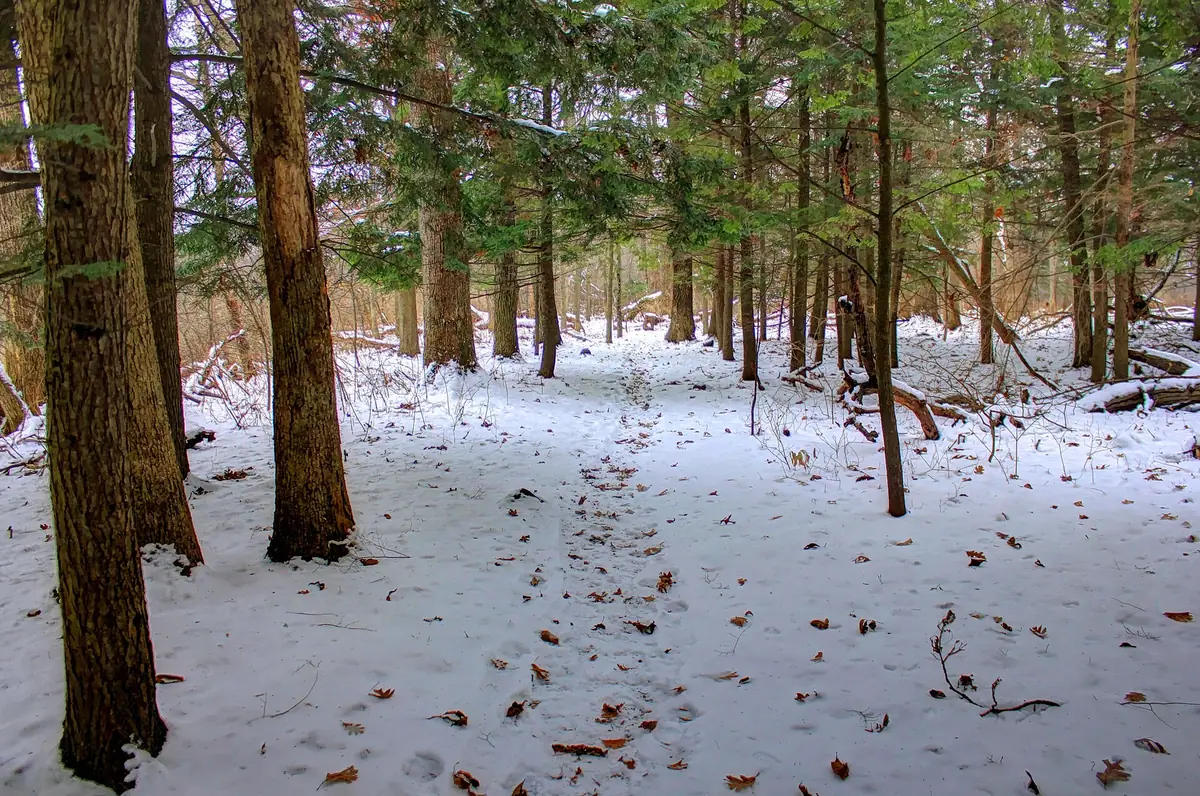
Forestry mulching is a way of clearing land with a single machine that cuts standing trees and brush and grinds them into wood chips right where they stood. There’s no felling and skidding, no piling, no burning and no hauling. The chips stay on the ground as a protective layer of mulch.
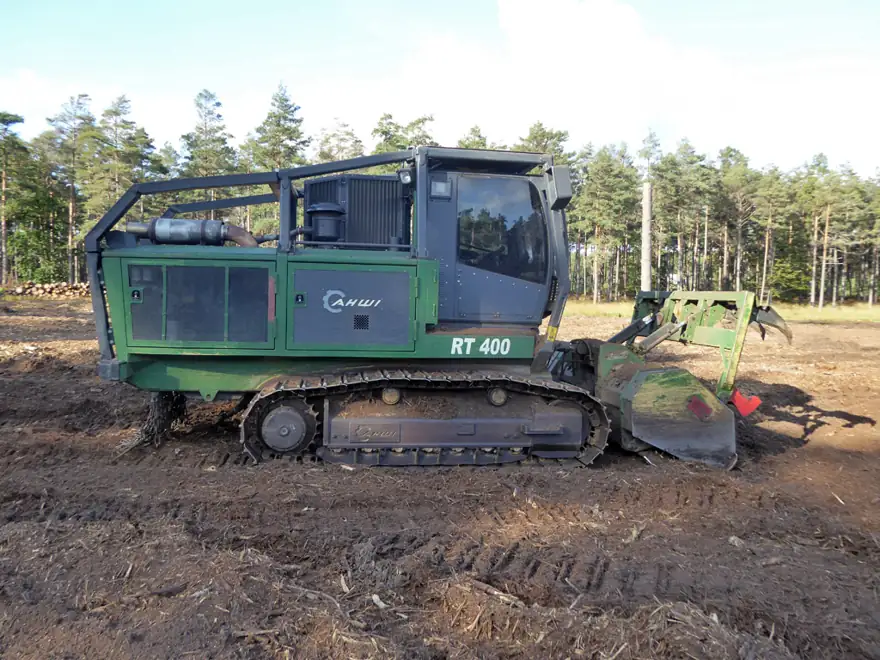
The machine
A forestry mulcher has two parts: a carrier and a mulching head. The carrier is usually a compact track loader (a tracked skid steer), a dedicated tracked mulching tractor, or sometimes an excavator for long reach. The head is a heavy rotating drum studded with carbide or steel teeth, spinning at high speed behind a protective hood.
The operator pushes the spinning drum into brush or the base of a tree. The teeth chew through it, and the operator walks the head up the trunk and through the crown, turning the whole tree into chips. Brush and saplings disappear almost instantly; a 6-inch trunk takes a bit longer.
What one pass does
- Cuts standing brush, saplings and small trees, usually up to about 6–8 inches with a skid-steer mulcher.
- Grinds trunks, limbs and leaves into chips.
- Grinds stumps to roughly ground level as it goes.
- Spreads the chips as an even mulch layer, typically a few inches deep.
Compare that to traditional clearing, where a crew fells trees, a skidder or dozer drags them into piles, the piles get burned or hauled away, and a dozer pulls stumps and levels the holes. That’s four or five steps, several machines, and a lot of bare dirt.
What it leaves behind
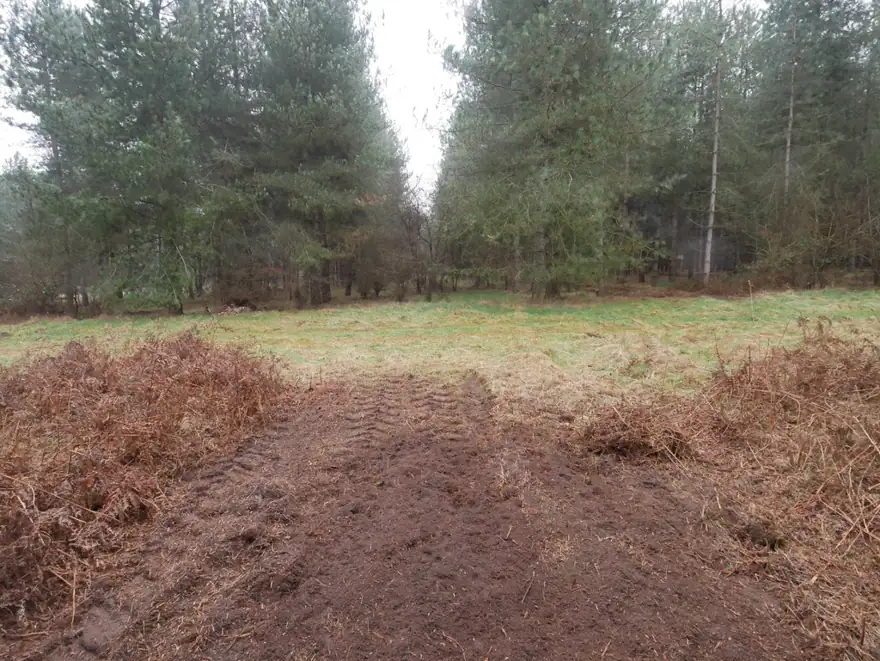
The finished ground looks like a forest floor after a fresh layer of wood chips. The topsoil and the root mat are still there because nothing was pushed or scraped. That mulch layer:
- Holds soil in place on slopes and sandy ground, which matters across much of central Wisconsin.
- Slows brush from coming back by shading the ground.
- Breaks down over a few years, adding organic matter.
What to do with the ground next depends on your plan. See what to do after forestry mulching.
What people use it for
- Clearing building lots for homes, cabins and pole barns
- Clearing underbrush while keeping the big trees
- Knocking back buckthorn and other invasive brush
- Trails, fence rows and rights-of-way
- Food plots and access trails on hunting land
- Reclaiming overgrown pasture
Need land cleared near Wausau?
Wausau Forestry Mulching clears lots, brush, buckthorn, trails and hunting land across central Wisconsin, mulched in place with a written price before any work starts. Request a quote online and we’ll call you back.
When it isn’t the right tool
Forestry mulching is not the answer to everything:
- Big timber. A woods full of 14-inch oak and maple is a logging job first. Sell the timber, then mulch the tops and brush.
- Grading and digging. Mulching doesn’t move dirt. Foundations, ponds and driveways still need an excavator.
- Grass and light weeds only. A brush hog is cheaper.
- Trees over buildings or wires. That’s a tree service with a bucket truck or climber.